.png)
Selling gets harder every year. Buyers expect more, the tools keep changing, and the teams that stand still lose ground.
This guide covers five strategies to increase sales in 2024 and beyond: how to use AI analytics, social media, email, loyalty programs, and market research to sharpen your process and win more deals.
1. Use AI to sharpen your sales strategy
AI gives sales teams a real edge. AI analytics surface customer intelligence you would not catch by hand, so your outreach lands on the right accounts at the right time.
Predictive analytics and customer insights
AI-driven tools read customer behavior through predictive analytics and detailed data analysis. They dig into what customers do and prefer, so your team can spot and prioritize the leads worth chasing. You sell to a smaller, better-targeted list and convert more of it.
Automating routine tasks
AI takes the repetitive work off your reps’ plates, from lead scoring to first-touch outreach and follow-ups. That frees the team to do the part that actually closes deals: build relationships and work the pipeline.
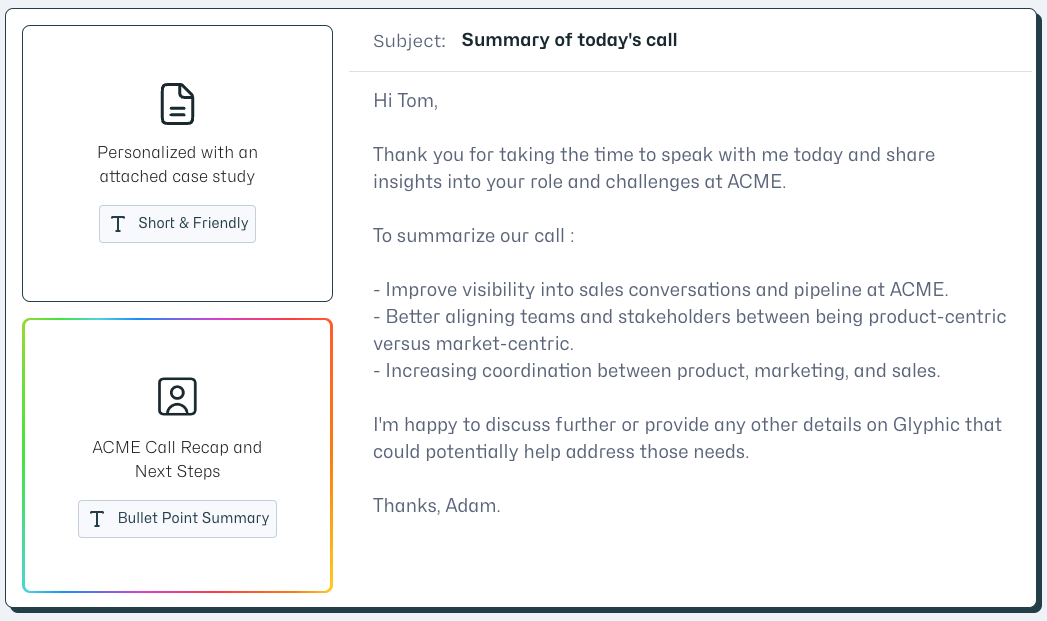
AI-powered follow-ups made easy with Airspeed
Optimizing process and forecasting
AI spots patterns in messy data that a person would miss. It reads trends, metrics, and market signals continuously, so you anticipate shifts instead of reacting to them after the fact.
That gets you the kind of predictive read on planning that would otherwise take a room full of analysts. You look forward instead of leaning on backward-facing reports.
2. Use social media for engagement and brand visibility
Social media connects you to current and future customers directly. Its role in the sales process goes well past promotion: it is where you engage, build the brand, and earn loyalty.

Build relationships through social platforms
Platforms like LinkedIn and Instagram let you talk to your audience directly. That is how you learn what customers need, gather feedback, and build a community around the brand. Show up consistently and you turn customers into advocates.
Tailor your message to the audience
Social lets you reach distinct segments with content built for each one. The analytics these platforms hand you show what your audience prefers and how it behaves. Use that to shape the message so it resonates and engagement climbs.
Lean on user-generated content and testimonials
When customers share their experience with your brand, your credibility rises. User-generated content like testimonials and reviews is word-of-mouth at scale: it lifts your reputation and gives you authentic content that pulls in new customers.
Drive sales with offers and promotions
Social is built for launching offers. Exclusive deals and time-limited discounts create urgency and push immediate purchases.
A strong offer can spread on its own, with people tagging friends who might want in. These campaigns are also a clean way to introduce new products, upsell, or cross-sell to customers you already have.
Treat social as a direct line to your customer base in 2024: a channel for engagement, brand building, and sales at once.
3. Make email marketing personal
Email is still one of your best channels in 2024. At an estimated $36 for every $1 spent, few tactics return more.
The reason is reach plus relevance: email puts personalized content in front of the customer directly, nurturing leads through the funnel.
Personalize the campaign
Personalization is what makes email work. Speak to a customer’s specific needs, interests, and pain points and your message lands harder.
This is where your CRM earns its keep. Use CRM tools (or systems that synthesize CRM data) to segment your base, and your campaigns get more targeted, your open rates and engagement go up.
Automate timely follow-ups
Automation keeps you in touch without the manual effort. Automated workflows fire follow-ups on time, nurture leads, and keep your brand top of mind. That steady contact is what turns leads into customers and brings existing customers back.
Measure what works
You cannot improve email you do not measure. Track open rates, click-through rates, and conversion rates to see what resonates, then feed that back into the next campaign.
Connect email to the rest of your marketing
Email should not run in a silo. Tie it to social, content, and your other channels so the customer gets one coherent experience.
That keeps your message consistent everywhere and makes the whole marketing effort hit harder.
4. Build a loyalty program for repeat business
Customer loyalty programs still work in 2024 because they tap a basic human pull toward belonging and recognition. Personalized rewards and VIP tiers give your biggest fans a reason to keep spending.
Whether you run points or exclusive events, loyal customers feel valued. That recognition is why they carry higher lifetime values, cost less to serve, and refer more business.

Design incentives your audience actually wants
A loyalty program lives or dies on whether the rewards fit your customers. Offer benefits tailored to their preferences and participation climbs. Research and customer feedback are how you find out what those rewards should be.
Use the program to upsell and cross-sell
A loyalty program is a clean setup for upselling and cross-selling. Read purchase history and behavior to find the moment to introduce a new product or premium tier. Done well, it nudges customers past their usual buys and lifts your average order value.
Use it to retain customers
A well-built program is one of your strongest retention tools. It creates belonging and appreciation, which is what keeps relationships going. Regular engagement keeps your brand front of mind and keeps customers loyal.
Use it to earn referrals
Design the program to reward referrals and your existing customers become advocates. Rewarding referrals grows your base and deepens the relationship with current customers, who feel credited for helping you grow.
5. Run on data and market research

Reading trends and anticipating market swings is what separates the teams that thrive from the ones left behind. Data analysis and market research are how you do it.
Know your audience, their needs, and the market dynamics, and your team makes informed calls, tailors its approach, and converts more.
Pull deeper insight from your CRM
Your CRM is where customer data lives: interactions, buying behavior, preferences. Use it to build buyer personas, map the customer journey, and find the touchpoints that matter. That insight is what lets you personalize the sale and meet customers where they are.
Reading CRM data by hand is slow. With an AI copilot like Airspeed, you just ask the tool questions about a customer and get an accurate answer pulled from your CRM. Quick, clear answers, and no more digging.
Do real market research
Market research keeps you ahead of trends and on top of your audience’s changing needs. Read market conditions, competitor moves, and customer feedback regularly so your strategy stays relevant. It is also how you find new openings for growth and the angles where you can stand out.
Run targeted campaigns off the data
Data-driven campaigns convert better because they speak to the customer directly. Use what your CRM and research tell you to build campaigns aimed at real needs and interests. You get more from the effort and waste less of the budget.
Track the metrics that matter
Watch your sales metrics and KPIs constantly so you can see what is working and adjust. Sales cycle length, customer acquisition cost, and customer lifetime value give you a clear read on performance and where to improve. Track them regularly and your strategy stays tied to the business and the market.
Final thoughts
Sales never stops changing, from the economy to the tools. As customer expectations move and markets swing, you have to keep tuning your strategy to grow.
There is no silver bullet. Run a mix of the five plays in this guide, test and learn, and double down on what delivers real results, for your company and your customers.