An AI sales copilot earns its keep in one place: the revenue number. It takes the admin off your reps, sharpens every call, and turns conversation data into the kind of insight a manager used to spend hours digging for.
Here are seven ways it shows up in the pipeline, and where Airspeed does the work most tools only describe.
1. Call Preparation
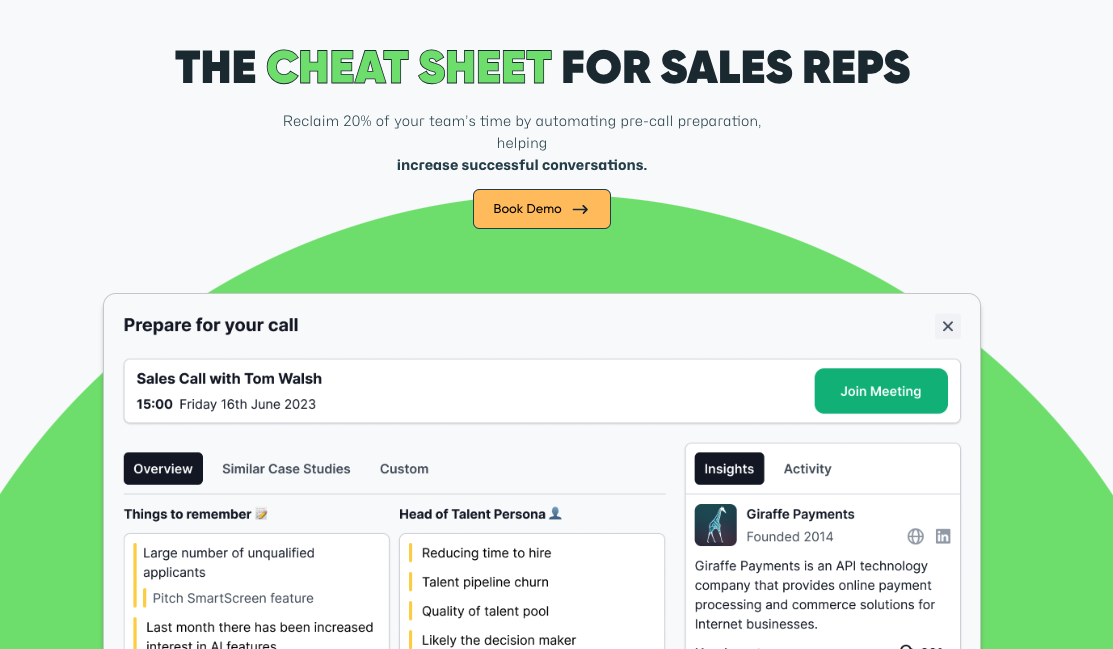
Most reps walk into a call with whatever they remember and whatever the CRM happened to capture. An AI copilot reads the account history, prior calls, and engagement, then hands the rep the context that matters: open needs, likely pain points, the questions worth asking.
Airspeed’s Call Preparation pulls this straight from your CRM and past conversations, so the rep opens the call already knowing where the deal stands and what to push on. The conversation lands closer to the buyer’s actual problem, which is what moves it forward.
2. Sales Coaching
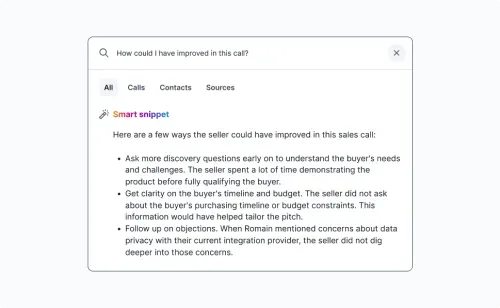
Manager-led coaching does not scale past a handful of reps. An AI copilot reviews every call, not a sampled few, and tells each rep exactly where they were strong and where they lost the thread.
Reps can ask the ‘Ask Airspeed’ tool how a specific call went and get feedback tied to that rep, not a generic checklist. Because the coaching is grounded in CRM context and real conversations, it points at the moments that mattered: the objection that stalled the deal, the discovery question that opened it up.
For sales teams that want coaching built into the workflow rather than booked as a separate meeting, Airspeed’s AI-powered personal sales assistant gives every rep individual feedback after every call, so improvement happens in days, not quarterly reviews.
3. Creating Automated Follow-Ups
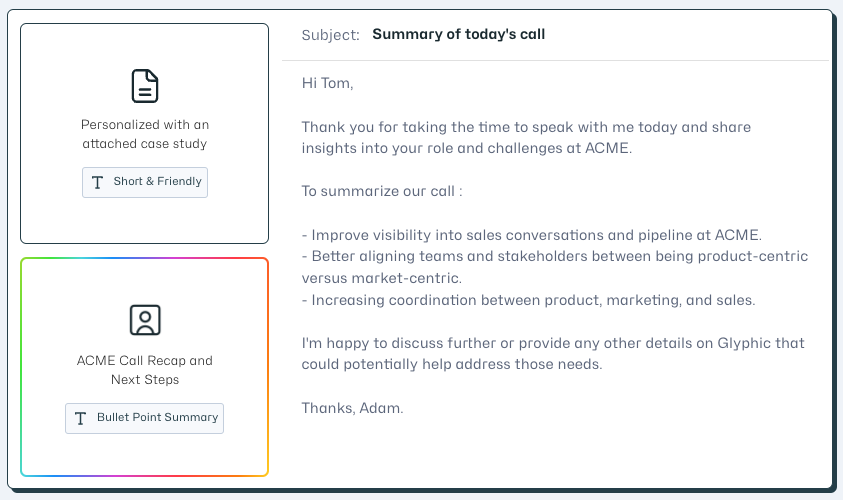
The follow-up that goes out an hour after the call beats the one that goes out two days later, when it goes out at all. Most reps know this and still fall behind, because writing each one from scratch is slow.
An AI copilot drafts the follow-up the moment the call ends, using the points raised, the resources promised, and the next steps agreed. With Airspeed, that draft is sitting in the rep’s inbox ready to send, built from the key points, action items, and next steps from the call. The rep reviews and hits send instead of staring at a blank email.
4. Eliminating Manual Data Entry
CRM admin is the tax reps resent most, and it is where data quality goes to die: people log what they remember, not what was said. An AI copilot captures and writes the record for them, pulling from calls, emails, and activity automatically.
Clean, current data is the payoff. When the CRM reflects what actually happened on every call, managers forecast on reality and reps stop losing Friday afternoons to catch-up.
Airspeed’s AI copilot tool automates data entry during and after every sales call. It connects to your existing CRM and writes the structured update itself, so reps spend their time with customers, not in form fields.
5. Enhancing Lead Qualification
Reps chase the wrong leads when qualification runs on gut feel. An AI copilot scores leads against your framework and the signals in the conversation, so the pipeline reflects which deals are real.
Predictive models read past buying patterns to flag which prospects are likely to convert, and which are a polite no. That lets reps put their hours where the deals are, instead of spreading effort evenly across a list that was never evenly worth it.
The qualification signal is only as good as the data behind it. A copilot that captures every call and scores it consistently gives managers a pipeline they can trust, not one inflated by optimism.
6. Providing Deal Insights
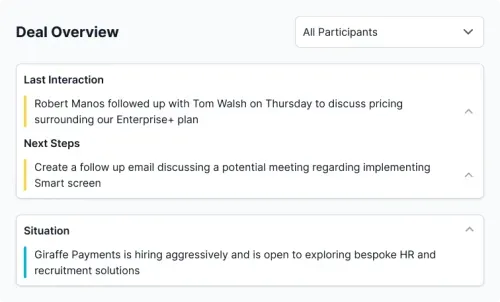
A deal looks healthy right up until it isn’t. Airspeed’s ‘Deal Insights’ tool reads the conversation signal across a deal and surfaces the risk before it becomes a closed-lost: the stakeholder who went quiet, the objection that never got answered, the next step that keeps slipping.
Because the insight is tied to what was actually said on calls, reps act on it early instead of finding out at the forecast meeting. That is the difference between adjusting a deal and explaining why it died.
Want a clearer read on where your deals really stand? Explore Airspeed’s ‘Deal Insights’ tool.
7. Sales Forecasting
A forecast built on rep optimism is a guess. A forecast built on call signal is a number you can defend.
An AI copilot keeps the forecast current as deals move, pulling from the conversations and activity behind each one rather than waiting for reps to update a spreadsheet. When the inputs refresh automatically, leaders see the pipeline as it is today, not as it looked at the start of the quarter.
That timeliness is what makes the forecast useful: you can shift resources to the deals that need them while there is still time to change the outcome.
Final Thoughts
An AI sales copilot does not just automate busywork. It raises the quality of every call, keeps the CRM honest, and turns conversation data into decisions reps and managers can act on.
Airspeed handles all seven jobs in one place: preparation, coaching, follow-ups, CRM updates, qualification, deal insights, and forecasting, all grounded in real conversations rather than rep memory. For teams tired of stitching together point tools that each add a task, that consolidation is the point.
Get in touch to see how Airspeed’s AI copilot lifts your revenue number.