“We don’t know, we don’t have a clue.” A painful admission, and the kind of honesty that opens the door to change.
That’s where Greenmarket (company name altered for privacy) found itself. A fintech processing high volumes of FX transactions, with relationship managers handling everything from onboarding to support to renewal, and no shared language for what good commercial performance looked like.
What followed is familiar to a lot of revenue leaders at growth-stage companies: a mandate to build a proper GTM engine on top of a foundation that was never designed for scale.
The messy middle of GTM transformation
Andrew joined Greenmarket with a clear brief: systematise the go-to-market engine. “Systematise” is easy to say. The starting point was harder.
Challenge 1: No qualification process. Deals moved forward on instinct, not criteria.
Challenge 2: CRM barely used. Conversations lived in inboxes and people’s heads.
Challenge 3: Generalists doing everything. No separation between support, success, and growth.
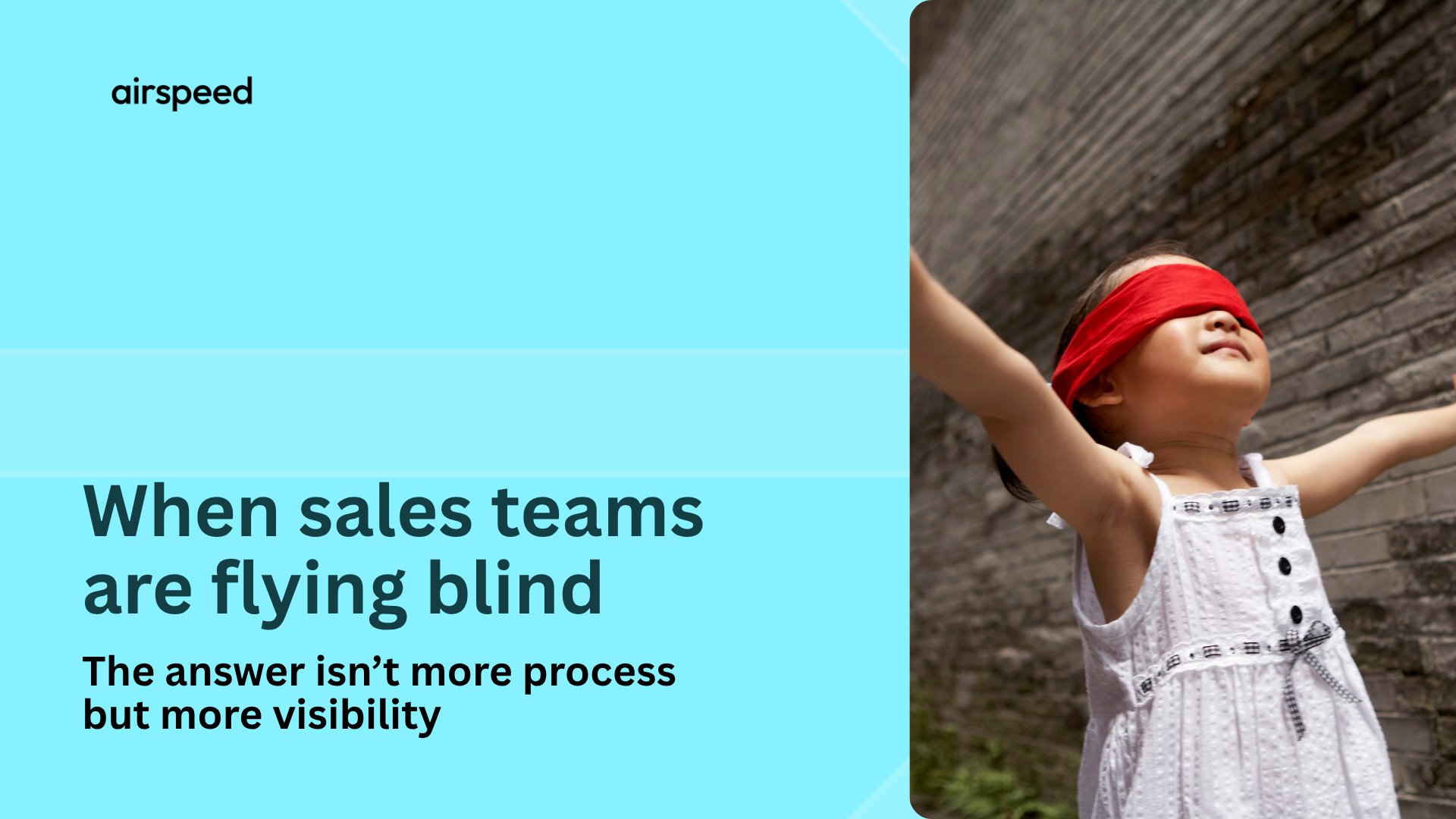
Challenge 4: Managers flying blind. No visibility into activity, pipeline, or deal risk.
The team was talented. But without structure or visibility, managers couldn’t coach, leadership couldn’t forecast, and the business couldn’t grow its existing customer base in any predictable way.
“We don’t have a clue about what’s happening in customer conversations. That makes it impossible for managers to drive their teams.”
Andrew, Chief Revenue Officer, Greenmarket
Why “wait until we’re ready” is a trap
A common instinct when restructuring a GTM team is to defer tooling decisions. Get the methodology right first. Define the process. Then bring in the technology to support it.
There’s a logic to this, and a flaw. Without data from real customer conversations, you’re designing your process in the dark. You don’t know where deals are slipping, what objections keep surfacing, or how your best reps differ from your weakest.
Andrew raised timing concerns. Internal changes were underway, teams were shifting, and a pilot felt like one more thing to manage. The counterargument held up: start capturing conversation intelligence now, and you’ll have real data to shape the methodology as it’s being built, not after.
That’s the difference between building a process on assumptions and building one on evidence.
What “getting visibility” actually looks like in practice
STEP 1: INSTRUMENT THE CONVERSATION LAYER
Greenmarket’s insight volume wasn’t coming only from sales calls. Email threads, customer support interactions, account check-ins; these were all places where commercial signals were hiding. The first job was to start capturing them systematically.
STEP 2: CLOSE THE CRM GAP WITHOUT BURDENING REPS
Manual CRM entry is a tax on rep time. It also degrades data quality; people log what they remember, not what was said. Automating CRM updates from conversation intelligence shifts the dynamic: reps spend time on customers, managers get accurate data.
STEP 3: SURFACE COACHING MOMENTS AT SCALE
One of the hardest parts of building a new sales team is showing people what “good” looks like. With conversation-level data, managers can point to specific moments: how a strong rep handled a pricing objection, or how a risk signal in a deal was picked up early and addressed.
STEP 4: STREAMLINE HANDOVERS BETWEEN FUNCTIONS
As Greenmarket restructured into support, customer success, and growth-focused account managers, clean handovers became critical. Shared context from customer conversations meant no one was starting from zero.
The broader lesson for GTM leaders
Greenmarket’s situation isn’t unusual. Most revenue teams that have grown quickly from a relationship-based model hit a version of the same wall: talented people, real customers, genuine product value, no shared infrastructure for commercial growth.
The temptation is to treat this as a process problem and solve it with frameworks. Gap selling, MEDDIC, Winning by Design. All genuinely useful. But frameworks without data are just vocabulary. The goal is a system where observation informs process, and process creates consistency.
Andrew’s approach at Greenmarket, grounded in his earlier work at Currency Cloud, was to run the GTM transformation as a parallel workstream: new team structure, new methodology, and new tooling at once, each informing the others.
The pilot with Airspeed showed strong early signal. HubSpot data persistence improved, managers found coaching opportunities they hadn’t seen before, and compliance teams flagged it as an asset rather than a risk. Internal alignment for a wider rollout is underway.
“There’s absolute value in the capability. I want to give the team more tools for their armory, and this is one of them.”
John, CRO, Greenmarket
For revenue leaders in similar positions: the foundation doesn’t have to be fully built before you start learning. Start capturing what’s actually happening in your customer conversations. Let that evidence shape the foundation you’re building.
Ready to get visibility into your GTM motion? See how Airspeed helps revenue teams move from instinct to intelligence, without adding to the admin burden.