
Demographics tell you who your customers are. They rarely tell you who is actually a good fit. Company size, industry, and job title are the easy filters, and they miss the part that predicts whether someone buys and stays: psychographics, the attitudes, values, and behaviors that drive a decision.
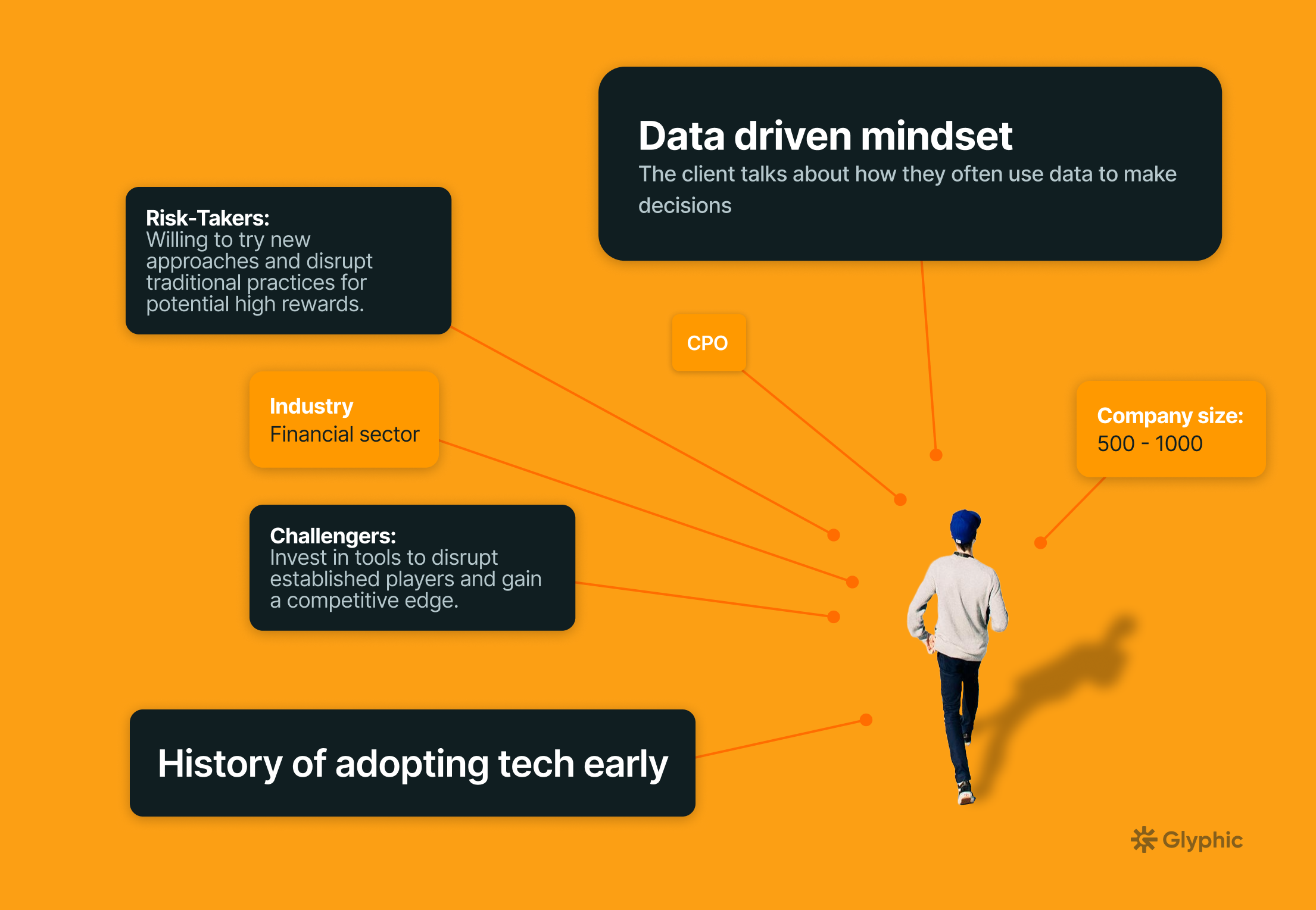
At Airspeed, we spent real time pinning down which customers get the most value from the platform. Knowing that group lets us focus on prospects like them, which lifts revenue, shortens deals, and lowers churn. The pattern: our happiest customers share an innovation mindset. We call them “Revenue-Focused Innovators.” They want their revenue teams operating at peak, they are curious and quick to move, and they treat technology as a competitive edge. They trial multiple tools, need little hand-holding on AI, and automate wherever they can.
Add psychographics and your ICP gets sharper. You see which customers will resonate with what you sell, engage in a real way, and find value over the long run. Here is why they matter and how to build them into your strategy.
Why Psychographics Matter in Defining Your ICP
1. Psychographics Capture Intent and Motivation
Demographics tell you who your customers are. Psychographics tell you why they buy. They surface the motivations and values behind a decision. A sales leader who prizes continuous learning, for example, will be more open to AI-driven tools even in a traditional industry.
2. Deeper Customer Connection
Understand the psychographics and you connect on the buyer’s terms. You speak their language, address what they actually care about, and position your product against their core values. If your ICP skews toward forward-thinking buyers chasing efficiency, messaging about innovation and productivity lands harder than a standard pitch.
3. Improved Retention and Advocacy
Psychographics tie your ICP to long-term engagement, not just first interest. Customers who feel real alignment with your product’s values are the ones who become advocates. They see your product as part of how they hit their goals, which improves retention and drives referrals.
4. Competitive Advantage in Market Positioning
In a crowded market, psychographics are how you stand out. Your competitors target the same demographics you do. Align on psychographics instead and you reach buyers on a level they recognize. Lead with data-driven decision-making or innovation and you draw the buyers who treat data as their guide.
How to Incorporate Psychographics into Your ICP Strategy
Step 1: Identify Key Psychographic Traits in Existing Customers
Start with your current customers, especially the ones with strong engagement, frequent usage, or high satisfaction. Look for shared attitudes and interests. Do they show a growth mindset? Do they champion digital transformation? Those threads point to the psychographics at the core of your ICP.
On that note, we built a new insights tool that reads the nuance in a customer’s attitude, so you can categorize customer interactions psychographically across every call.
Step 2: Interview Customers to Understand Values and Attitudes
Run in-depth interviews or surveys with high-value customers to uncover what drives them. Ask about goals, challenges, and beliefs. What you hear sharpens your ICP and aligns your messaging with the values that matter to them.
Step 3: Use Psychographics to Segment and Target
Psychographics let you segment inside a broad demographic. Within B2B sales, for instance, you might isolate “early tech adopters” or “data-driven decision-makers.” Target each subset with messaging built for its mindset and engagement climbs.
Step 4: Align Marketing and Sales Messaging with Psychographic Insights
Once you know the traits that define your ICP, shape your marketing and sales materials around them. Show the features and benefits, then speak to values like productivity, simplicity, or innovation. Address the aspirations and pain points specific to your psychographic ICP and the narrative goes deeper than the surface.
Examples of Using Psychographics in ICP Definition
Example 1: Customer-Centric Innovators
If your ICP leans toward decision-makers who care about customer experience, highlight the features that improve client interactions: intuitive interfaces, insights that sharpen those interactions. These are “customer-centric innovators,” a trait that runs across many industries.
Example 2: Growth-Oriented Leaders
If your ICP centers on leaders scaling efficiently, lead with automation, productivity, and data-backed growth. They are not just closing deals; they are after sustainable growth, so speak to their need for tools that support it.
Measuring Psychographic Success
Tracking how psychographics affect your ICP takes both qualitative and quantitative signals:
Engagement Metrics: Track which psychographically tailored messages resonate most across social, ads, and other content.
Customer Feedback: Ask new customers what shaped their decision to buy. If they keep citing values or psychographically aligned messaging, you are reaching the right ICP.
Retention and Advocacy: Watch retention and referrals among psychographically aligned customers. Strong retention says they found a values-based fit that goes past pure function.
Final Thoughts: Psychographics as a Competitive Edge
Build psychographics into your ICP and you move past basic segmentation to connect on something that matters. Understand what drives your customers beyond the basics and you stop selling a product; you offer a solution that maps to their values and aspirations. That connection earns loyalty, sharpens the customer experience, and marks you as a brand that genuinely understands its audience.
To stand out in a competitive market, psychographics are a tool most teams overlook, and they sharpen acquisition, retention, and advocacy. Look beyond demographics and you meet your ideal customers not only where they are, but where they want to go.
Written by,
Chatura Fernando Product @ Airspeed
.png)